Monday, February 1, 2016

Extreme Weather and Global growth


                                                 Comments due by Feb 12, 2016


 Until recently, the usual thinking among macroeconomists has been that short-term weather fluctuations don’t matter much for economic activity. Construction hiring may be stronger than usual in a March when the weather is unseasonably mild, but there will be payback in April and May. If heavy rains discourage people from shopping in August, they will just spend more in September.

But recent economic research, bolstered by an exceptionally strong El Niño – a complex global climactic event marked by exceptionally warm Pacific Ocean water off the coast of Ecuador and Peru – has prompted a rethink of this view.


Project Syndicate needs your help to provide readers everywhere equal access to the ideas and debates shaping their lives.
LEARN MORE
Extreme weather certainly throws a ringer into key short-term macroeconomic statistics. It can add or subtract 100,000 jobs to monthly US employment, the single most-watched economic statistic in the world, and generally thought to be one of the most accurate. The impact of El Niño-related weather events like the one this year (known more precisely as “El Niño Southern Oscillation” events) can be especially large because of their global reach.
Recent research from the International Monetary Fund suggests that countries such as Australia, India, Indonesia, Japan, and South Africa suffer adversely in El Niño years (often due to droughts), whereas some regions, including the United States, Canada, and Europe, can benefit. California, for example, which has been experiencing years of severe drought, is finally getting rain. Generally, but not always, El Niño events tend to be inflationary, in part because low crop yields lead to higher prices.
After two crazy winters in Boston, where I live, it would be hard to convince people that weather doesn’t matter. Last year, the city experienced the largest snow accumulation on record. Eventually, there was no longer any place to put it: four-lane highways narrowed to two lanes, and two-lane roads to one. Roofs collapsed and “ice dams” building up from gutters caused severe flooding. Public transport closed, and many people couldn’t get to their jobs. It was a slow-motion natural catastrophe that lasted for months.
The US as a whole did not have a winter as extreme as New England’s in the first part of 2015, and the effects of the weather on the country’s overall economy were subdued. True, New York City had some significant snowfalls; but no one would have paid much attention had the mayor been more competent in getting the streets plowed. Eastern Canada suffered much more, with severe winter weather playing a role (along with lower commodity prices) in the country’s mini-recession in the first half of the year.
This year’s winter is the polar opposite of last year’s. It was 68º Fahrenheit (20º Celsius) at Boston’s Logan Airport the day before Christmas, and the first speck of snow didn’t come until just before New Year’s Day. Trees and plants, sensing spring, started to blossom; birds were just as confused.
Last winter Boston was something of an anomaly. This year, thanks in part to El Niño, weird weather is the new normal. From Russia to Switzerland, temperatures have been elevated by 4-5º Celsius, and the weather patterns look set to remain highly unusual in 2016.
The effect on developing countries is of particular concern, because many are already reeling from the negative impact of China’s slowdown on commodity prices, and because drought conditions could lead to severe crop shortfalls. The last severe El Niño, in 1997-1998, which some called the “El Niño of the Century,” represented a huge setback for many developing countries.
The economic effects of El Niño events are almost as complex as the underlying weather phenomenon itself and therefore are difficult to predict. When we look back on 2016, however, it is quite possible that El Niño will be regarded as one of the major drivers of economic performance in many key countries, with Zimbabwe and South Africa facing drought and food crises, and Indonesia struggling with forest fires. In the American Midwest, there has lately been massive flooding.
There is a long history of weather having a profound impact on civil strife as well. Economist Emily Oster has argued that the biggest spikes in witch burnings in the Middle Ages, in which hundreds of thousands (mostly women) were killed, came during periods of economic deprivation and apparently weather-related food shortages. Some have traced the roots of the civil war in Syria to droughts that led to severe crop failure and forced a mass inflow of farmers to the cities.
On a more mundane level (but highly consequential economically), the warm weather in the US may very well cloud the job numbers the Federal Reserve uses in deciding when to raise interest rates. It is true that employment data are already seasonally adjusted to allow for normal weather differences in temperate zones; construction is always higher during spring than winter. But standard seasonal adjustments do not account for major weather deviations.
Overall, the evidence from past El Niños suggests that the current massive one is likely to leave a significant footprint on global growth, helping support economic recovery in the US and Europe, while putting even more pressure on already weak emerging markets. It is not yet global warming, but it is already a very significant event economically – and perhaps just a taste of what is to come.(Project Syndicate)

Sunday, January 24, 2016

Doha Is Dead,Whats next?

                                                                    Comments due by Feb. 4, 2016
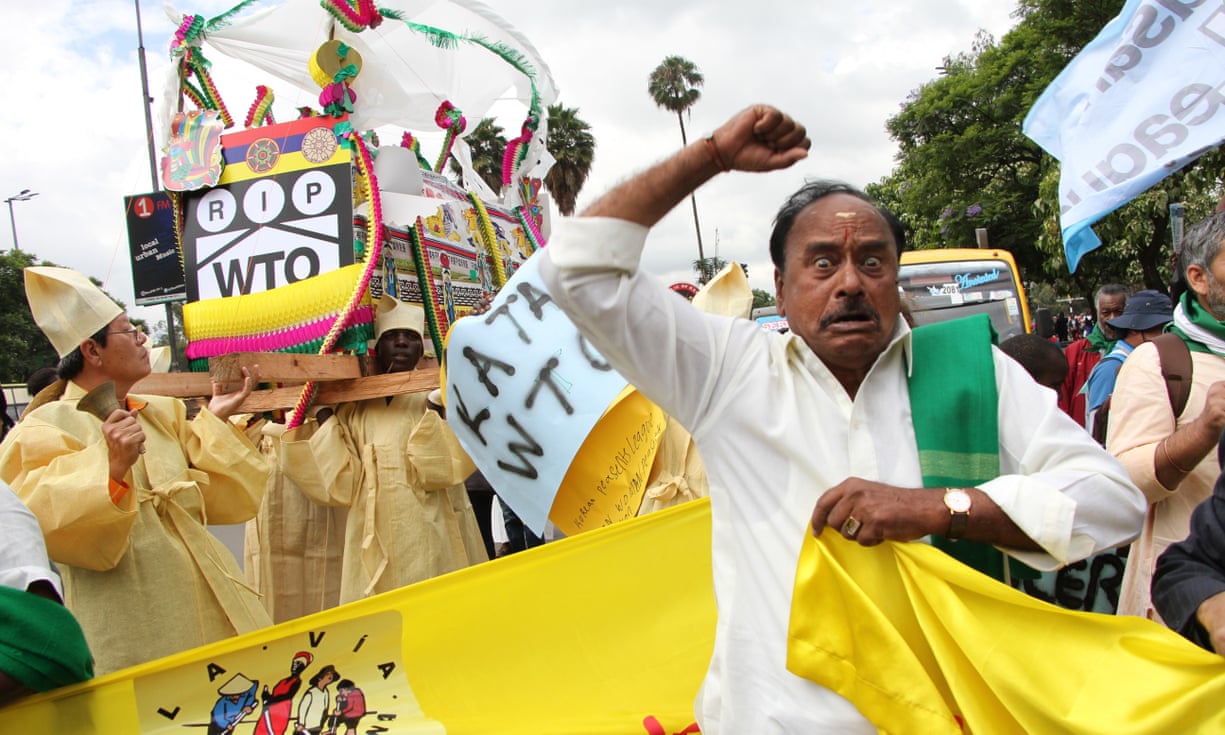
Over the past few days, trade ministers from scores of countries have spent hours flogging the long-dead horse that is the Doha round of global trade talks in Nairobi – and hardly anyone noticed. The World Trade Organisation, which convened last week’s conference, was once regularly targeted by protesters as the secretive, all-powerful puppet master of global capitalism.
Back in 1999, in the innocent days before the sub-prime crisis laid bare the sinister power of international finance, WTO talks in Seattle broke down amid clouds of tear gas, as anti-capitalist protesters expressed their fury at the rigged rules of the global marketplace, which, as they saw it, entrenched the wealth of the rich and excluded the poor. Yet last week’s gathering, attended by Britain’s Lord (Francis) Maude, barely registered with the world’s angry young radicals, who have turned their attention to bashing bankers – through the Occupy movement, for example.
As it became clearer in recent years that the Doha round was dying, the anti-poverty campaigners who once spent hours poring over the intricate details of cotton subsidies and sugar tariffs have moved on too.
Launched in late 2001, in the wake of the 9/11 attacks in New York, the Doha round was meant to open up new opportunities for developing countries to trade their way out of poverty and drive the next stage of what then seemed the unstoppable progress of globalisation.
But 14 years of talks have failed to yield an achievable deal; indeed, the issues dividing the main protagonists have barely shifted since negotiations collapsedacrimoniously in Geneva in July 2008. Back then, I watched US trade representative Susan Schwab lambast her Indian and Chinese counterparts for wanting to protect their farmers from cut-price imports. This issue of “special safeguards” was still being scrapped over in Nairobi.

The one-country-one-vote constitution that makes the WTO a more democratic institution than, for example, the International Monetary Fund, also makes negotiations cumbersome and decision-making clunky.Doha failed for many reasons, some more worrisome than others. It was probably always far too ambitious to try to tie up simultaneous deals across agriculture, manufacturing and services. The hope was that countries would give ground in some areas in return for concessions elsewhere, but this unwieldy, triple-track approach meant deadlock in one area led to comprehensive failure.
Political capital was another key challenge: lowering barriers to foreign competition is a tough domestic sell, especially in hard times when workers feel their jobs may be vulnerable. Optimists at the WTO’s Geneva headquarters hoped President Obama would swing his weight behind their efforts to improve the global trading system, but other priorities – not least the fraught passing of his healthcare reforms – have always seemed more pressing in Washington, where suspicion of unfettered free trade runs deep on both sides of Congress.
And most recently, a flowering of “plurilateral” deals, such as the Trans-Pacific Partnership between the US and Japan, has seen groups of like-minded countries – economic coalitions of the willing – sign up to liberalisation on their own terms.
Meanwhile, the nature of contemporary capitalism means the hot political issues are no longer import tariffs or agricultural subsidies but international taxation, financialisation and freedom of movement for migrant workers.
If Doha is dead, some noble aspirations will be buried with it. It was conceived as a “development round” – offering poor countries a stake in the global trading system to tackle poverty and prevent them from becoming recruiting grounds for terrorism. It became increasingly clear, though, that rich countries were unwilling, or politically unable, to offer much without a quid pro quo – and developing countries don’t have much to give.

Afghanistan became the WTO’s latest fully signed-up member in Nairobi last week. (This was one of the few concrete announcements to come out of the summit.) But it is joining a train that has been stuck in the station for more than a decade.So what began as an expression of the spirit of internationalism quickly descended into a series of cross-cutting mercantilist spats. And while trade liberalisation continues apace through plurilateral deals between powerful trading blocs, these rarely include the poorest countries.
The WTO still has a crucial role to play, as the policeman of the world’s trading system. But after 14 years of deadlock, the ideal of deepening economic relationships between rich and poor, north and south, in a way that would be mutually beneficial and to which all member countries could sign up has been extinguished.
Even protesters who once saw the WTO as the evil headquarters of capitalism red in tooth and claw might spare a moment to lament the fading of one-country-one-vote multilateralism it represented. (The Paris climate talks provided a heartening counter-example – albeit with few details as to how new emissions targets will be met.)
But for those on the left who dream of collective global solutions to the other pressing ills of modern capitalism, from tax avoidance to reckless financiers, 14 years of failure ought to give pause for thought.

Friday, November 14, 2014

US-India Agreement could revive Trade Deal.

                                                   Comments Due by Nov. 24, 2014

India and the United States reached an agreement on Thursday over food stockpiles, removing a major obstacle to a global trade deal that has been stalled for months.

The pact, which precedes a meeting this weekend of the Group of 20
major economies, allows India to continue its extensive food subsidy
program. In settling the dispute, India returns to the negotiating table on a
broader trade package.

That package, first agreed upon at a World Trade Organization meeting
in December in Bali, Indonesia, is the first significant global trade deal since
the creation of the W.T.O. nearly two decades ago. Aimed at facilitating the
movement of goods across international borders, the agreement focuses on
easing customs procedures, reducing red tape and upgrading border
infrastructure.

Proponents of the deal argue that it would add $1 trillion to the global
economy and create 21 million jobs. Critics, though, have noted that it
would require a substantial investment from developing countries to
upgrade their ports and borders.

But talks on the trade package reached an impasse in July when India
said it would veto the global trade deal unless a dispute over its food
security program was resolved. Since then, India has faced resistance from
other member countries for stalling a critical agreement.

Michael B. Froman, the United States trade representative, said that
President Obama and Prime Minister Narendra Modi of India had discussed
the issue during Mr. Modi’s visit to Washington in September in light of the
“mounting crisis of confidence” facing the W.T.O. after the trade deal was
derailed. “In recent days, officials of both governments worked intensively
and reached an agreement that should give new momentum to multilateral
efforts at the W.T.O.,” Mr. Froman said in a statement.

India views the stockpiling as core to its food security and its efforts to
feed millions of its impoverished citizens.

The Indian government buys food, including grain, from its farmers
and stockpiles it for a public distribution system, where it is sold at
government-run stores at subsidized prices. The food subsidy program,
which has often been criticized as ineffective, is available to 75 percent of
India’s rural population and 50 percent of the urban population, according
the National Food Security Act introduced last year.

W.T.O. rules say that subsidizing more than 10 percent of the grain
produced for food in a country distorts the market for trade. But India
wants to do away with that cap. Countries including the United States and
Pakistan have expressed fears that India was accumulating too much grain
and that it might eventually release the surplus on the world market,
lowering prices for other producers.

In Bali, W.T.O. members had agreed to a temporary solution in which
developing countries would not be penalized for breaching their subsidy
levels until a permanent solution was found by 2017. Indian officials,
though, were concerned that the issue had been sidelined and wanted talks
on the issue to progress.

India and the United States have now agreed on a “peace clause,” which
protects member countries from being legally challenged under W.T.O.
agreements until a permanent solution is found on the stockpiling issue.
The clause will keep India safe from accusations that it subsidizes too much
grain beyond 2017. A timeline for negotiations on stockpiling was also set
giving India the assurance that the issue will be dealt with promptly.
“India and the United States have resolved their differences on public
stockholding of food,” Nirmala Sitharaman, India’s commerce minister, said
on Thursday at a news conference in New Delhi. The move, she said, paves
the way for India to ratify the global trade deal.

“This breakthrough represents a significant step in efforts to get the
Bali package and the multilateral trading system back on track,” Roberto
Azevêdo, the director general of the W.T.O., said in a statement. “It will now
be important to consult with all W.T.O. members so that we can collectively
resolve the current impasse as quickly as possible. Implementation of all
aspects of the Bali package would be a major boost to the W.T.O., enhancing
our ability to deliver beneficial outcomes to all our members.”

Analysts said the agreement with the United States would improve
India’s negotiating position at the G-20 meeting and in other global talks.
“It is a move ahead both for multilateralism at the W.T.O. and for India,
which was being viewed as obstructionist,” said Rajrishi Singhal, a senior
geoeconomics fellow at Gateway House, a foreign policy research group in
Mumbai.
(NYT 11/14/14)

Friday, November 7, 2014

US Trade Policy and the Republican Win


                                                  Comments due by Nov. 17, 2014
The Republican party has won majority in the Senate, possibly providing an opening for two pending U.S. free trade agreements. The U.S. is currently engaged in negotiations on two international pacts.
Republicans have traditionally been more supportive of trade agreements because of the potential to increase economic growth and business, while Democrats have been wary that such policies could negatively impact domestic jobs, labor standards and environmental regulation. The Obama administration has negotiated two such agreements – the Trans-Pacific Partnership and the Transatlantic Trade and Investment Partnership – but the president hasn’t found backing from Senate Democrats, the chamber responsible for approving trade agreements.
Sen. Mitch McConnell of Kentucky, likely the new Senate majority leader, said Wednesday in Louisville that Republicans and President Barack Obama share an agenda on trade.
“I’ve got a lot of members who believe that international trade agreements are a winner for America and the president and I discussed that right before I came over here,” McConnell said. “I think he’s interested in moving forward. I said, ‘Send us trade agreements, we’re anxious to look at them.’”
Obama also made reference to trade agreements Wednesday in his own postelection press conference, saying it was one area in which Democrats have a “real opportunity” cooperate with Republicans.
Current Senate Majority Leader Harry Reid made clear earlier this year he would not support passage of legislation that would fast track free trade agreements through the chamber after a deal has been reached by international partners. The Trade Protection Authority, which expired in 2007, means the Senate votes a simple yes or no on trade deals – no amendments or modifications are allowed.
“That’s what the world’s looking for in terms of America’s ability to negotiate seriously,” says Yukon Huang, a senior associate at the Carnegie Endowment. “They don’t want negotiate something and later on find it’s going to be renegotiated in the context of congressional discussions.”
Reid said in January, "I think everyone would be well-advised just not to push this right now” of pursuing the Trade Protection Authority.
Some took these comments to mean that passing the legislation before Tuesday’s midterm election would be disadvantageous for Democrats, but that Reid could pursue the agenda in the remaining lame duck session.
Miriam Sapiro, a former deputy U.S. trade representative and visiting fellow at the Brookings Institution, said now the election is over she hopes Reid will be open to the possibility of advancing a trade agenda by passing the Trade Protection Authority, also know as fast-track authority, and thus boosting the chances of a successful Trans-Pacific Partnership and Transatlantic Trade and Investment Partnership.
“These can be tough votes for members because there is concern about potential job loss,” Sapiro says. “In the past, trade agreements have led to growth in net number of jobs. But sometimes there can be particular jobs that are no longer as competitive. There is a legitimate concern of how do you help retrain workers that might be effected by a trade agreement?”
The Trans-Pacific Partnership is an agreement being negotiated by the U.S. and 11 other countries in the Pacific, but notably does not include China. The U.S. and the European Commission are negotiating on the Transatlantic Trade and Investment Partnership.  
Even if the Senate doesn’t advance a trade agenda in the remainder of 2014, the pending agreements are likely to find support among the Republicans in the next session of Congress. Sen. Orrin Hatch, R-Utah, the likely new chair of the Senate Finance Committee, which is responsible for shepherding trade policy, supports the current agreements. 
The fact that the Trans-Pacific Partnership doesn’t include China is also a selling point, says Huang.
“If China were a part of the [Trans-Pacific Partnership], it would probably get much more scrutiny and concern about whether the agreement is in America’s interests. So that removes that element that’s always been very, very contentious,” Huang says.
China isn’t party to the negotiations because when they were initiated, it was unwilling to accept the standards the agreement required on issues like the role of state-run enterprises and intellectual property. Huang says China has since informally requested to join the negotiation process but “essentially was old it was too late.” Negotiations will continue at next week’s Asia-Pacific Economic Cooperation meeting in Beijing, but may not dominate the agenda because of China’s absence.  
Negotiations for the Transatlantic Trade and Investment Partnership lag behind those of its Pacific counterpart, because negotiations only began in 2013. Europe and the U.S. have a lot of work to do in terms of reaching complimentary standards that would allow a free-trade agreement to move forward, says Sapiro. Things like how to build automobiles, rules for the export of animal products, and regulations for how goods are produced differ between the continents and complicate imports.
Another potential barrier to passage of both of the agreements is U.S. agricultural policy, which heavily subsidizes farmers. These price controls, also put in place domestically in Europe and Japan, make it difficult to ensure the countries are on an even playing field in the global economy. Countries have a hard time selling cuts to subsidies domestically.
“America does have a problem in terms of protecting its farm belt and it has a cost for everybody,” Huang says. “But the degree of protection and barriers are even more significant in Japan and Europe so that if there is a mutual understanding and agreement America stands to gain in the process rather than lose.” (US News)

Saturday, November 1, 2014

EU-US trade agreement


                                               Comments due by  Nov 9, 2014
2014 should be a transformational year for the transatlantic partnership. The United States and the European Union continue to slog through an underwhelming economic recovery, while conflicts from Ukraine to Iraq to North Africa have forced themselves onto to-do lists in Washington and Brussels. Much like in 1945 or 1989, the decisions made today by President Barack Obama and European leaders will have ramifications that reach far beyond the shores of the North Atlantic.
NATO commanders and strategists conferred recently in Britain to discuss ways to reestablish peace in the face of these threats. This week, European and American negotiators are meeting in Washington on a very different issue: How to jumpstart economic growth and create high-quality jobs on both sides of the Atlantic. Understanding that economic prosperity and international security are inextricably linked, the world’s two largest economic powers – the United States and the EU – are working to establish the Transatlantic Trade and Investment Partnership to set a global gold standard of free trade and regulatory cooperation. Clearly, the trade partnership is not just about economics; as geopolitical tensions across the world worsen, it is vital to show a united transatlantic front bridging security, politics and commerce.
Other nations are watching closely as the United States and the EU negotiate a comprehensive agreement designed to spur growth and send a strong message: The democratic free market economic model can still deliver. Alternative systems that emphasize a greater role of government control and little room for democracy are arising in much of the world. It is crucial that the United States and Europe regain their economic dynamism. Nothing less than our future global leadership and credibility is at stake.
Economic ties across the Atlantic already run deep. Over $2 billion in goods and services crosses the ocean each day, and over 13 million American and European workers already owe their jobs to transatlantic trade and investment. Still, the time is right to deepen our engagement. The United States and Europe will not constitute almost half of global gross domestic product forever. This may be our last and best chance to preserve the kinds of high standards in product safety, digital and data privacy and environmental and labor protections that our citizens justifiably hold dear.
Given its global ramifications, the Transatlantic Trade and Investment Partnership should not be viewed as just another trade agreement. If successfully negotiated, the partnership could provide the platform for another century of transatlantic prosperity. We must not fail. After all, if we cannot agree with our closest partners, what incentives will China, Brazil, India and others have to return to the global negotiating table?
Without question, there are major challenges to overcome, particularly in Europe. Americans and Europeans do not agree on everything; just look at the fallout from last summer’s National Security Agency revelations or differing opinions on the safety of genetically-modified foods. Government leaders have struggled to find a path forward on vital issues like financial regulatory cooperation. The two sides must find a way to partner on energy as Russia continues its aggression in Ukraine. Europe faces a serious threat to its energy supply, but thanks to the shale gas revolution, the United States can eventually become a key partner as the continent diversifies its supply
Public opinion polls show that a majority of Europeans and Americans believe in the idea of an integrated transatlantic market, but that majority erodes when asked to adapt their own rules and regulations to make it a reality. The devil, then, is in the details. It is up to negotiators to find solutions which make it easier to do business across the Atlantic, invest and hire workers without lowering standards. Congress and the European Parliament must then consider the agreement on its merits before approving it.
We should not let our relatively minor disagreements stand in the way of the most significant strategic opportunity in decades to strengthen the economic foundations of the transatlantic alliance. In today’s gridlocked political environment, Republicans and Democrats alike have indicated their willingness to support an agreement that strengthens the U.S. economy and strengthens the transatlantic partnership.
Research from the Atlantic Council, conducted in partnership with the British Embassy in Washington, and the Bertelsmann Foundation, shows that every U.S. state gains jobs and increases their exports once an ambitious agreement is implemented. In all, close to 750,000 U.S. jobs will be added due to increased trade alone. A necessary first step requires the administration and Congress to work together to secure Trade Promotion Authority, which will strengthen the U.S. government’s ability to negotiate an ambitious agreement.
One needs to look no further than the hundreds of millions of people lifted out of poverty over the course of recent decades to realize just how linked peace and prosperity have become. International trade and global economic engagement have given hope and opportunity to countless young people who otherwise might have considered dangerous religious fanaticism or insular nationalism as alternatives. In order to prevent a lost decade of economic stagnation in Europe, fight against a rising wave of political populism and reengage a generation of unemployed youth, the United States and Europe desperately need the kind of deficit-neutral stimulus that only the Transatlantic Trade and Investment Partnership can provide.
Transatlantic leaders have responded strongly together to the global threats represented by Russia and the Islamic State group. Now, leaders must invest time and energy in support of this transatlantic partnership. Only a vibrant, competitive and prosperous transatlantic economy will extend our security and global strategic influence well into the future. This will require hard work and difficult political decisions to inspire and lead an informed public debate on the merits of expanded transatlantic commerce. The Transatlantic Trade and Investment Partnership represents a rare chance to put the U.S.-European economic relationship on par with our mutual commitment to transatlantic security. Let us hope that our leaders do not miss this historic moment. 

Friday, October 24, 2014

Doha Round finally delivers.

(This article appeared in the Economist of December 2013. The Doha round fate is still hanging in the balance)
******************************************************************************************************
                                             
                                                  Comments due by Nov. 2, 2014
IT TOOK every bit of the allotted time and then some. In the wee hours of December 6th the members of the World Trade Organisation rose to applaud the successful conclusion of the first multilateral trade agreement negotiated at the WTO. The deal, reached at a ministerial conference on the island of Bali, in Indonesia, is the first fruit to be borne of the long-barren Doha round of international trade talks. But the agreement leaves the future of global talks cloudier than might have been hoped.
Casual observers might be surprised to learn Doha was not already dead, so long and treacherous was the road to the round’s conclusion. Doha, which began in 2001, suffered near-fatal breakdowns in 2003 and 2008. When trade officials worked to resuscitate discussions in 2012 they opted to keep the agenda as simple and attractive as possible. Even so, talks almost collapsed on multiple occasions. Cuba nearly sank an agreement at the eleventh hour, by threatening to oppose any deal that failed to chip away at America’s embargo of the small economy. Over the past few months Roberto Azevedo (pictured above, to the left, with the meeting's host, Indonesia's trade minister), who took over the job of Director-General of the WTO in September, repeatedly warned that this or that disagreement posed a mortal threat to the Bali package. Yet at each turn Mr Azevedo kept the parties at the table until compromise could be reached.
At the heart of the deal is an agreement on “trade facilitation”, or measures to reduce trade costs by cutting red tape in customs procedures. Trade facilitation could cut global trade costs by more than 10%, by one estimate, raising annual global output by over $400 billion, with benefits flowing disproportionately to developing economies. It nonetheless proved a tricky item to settle. Some poorer countries raised concerns about their ability to make the required capacity upgrades, and talks briefly stalled as arrangements for assistance were worked out.
Yet agriculture proved the sorest subject, as ever. Disagreement spanned several issues, the most contentious of which concerned agriculture subsidies. India, its government facing a general election next year, spearheaded an effort to prevent emerging markets from facing challenges at the WTO over subsidies granted to farmers under the aegis of “food security” measures. In the months leading up to the Bali meeting India wrung substantial concessions from rich-world economies, including a four-year “peace clause” that would have granted developing countries protections from such challenges. Not satisfied with that, India later threatened to derail talks unless the issue was reopened. India ultimately won an indefinite waiver, good until a permanent solution can be reached.
Several other disputes received similar papering over. Indeed, while trade facilitation counts as a meaningful achievement, the deal is unlikely to convince sceptics that the multilateral process can produce ambitious reforms—not while those least committed to progress, like India in this case, can threaten to sink an entire agreement unless their demands are met.
Relief at having finally reached a WTO deal will therefore turn quickly to hand-wringing over what should follow. It will fall to Mr Azevedo to read the mood of the membership and chart a course forward. He will emerge from this process with new credibility and a trust in his ability to choose attainable goals. But he will quickly have to make two key decisions: what issues to press and how to achieve them.
Plenty of bullet points remain on the Doha agenda. They include further progress on matters, like the food security waiver, that received inconclusive treatment at Bali, and other long-simmering issues like progress on ending agricultural subsidies altogether. Yet plowing back into such territory risks wasting the momentum of the Bali deal. Mr Azevedo might instead seek to open discussions on fresher subjects. Investment issues provide one possibility; the WTO could work to rein in investment subsidies and set ground rules for when countries can invest across borders without interference. Trade in environmental goods and services, which covers everything from air filters to environmental consulting, is also expected to take centre-stage.
Mr Azevedo will have a more difficult decision in choosing which items to keep on the multilateral docket, for negotiation among all WTO members, and which to let slip into “plurilateral” deals. Plurilaterals can proceed within the WTO, and allow coalitions of willing countries to agree deals that apply only to signatories, and not to all members. Agreements on services and on IT that are now under discussion fall into this category. China’s minister of commerce used a speech in Bali to suggest it supported the use of plurilaterals to move liberalisation forward. It is possible that Bali, while enhancing the role of the WTO as a forum for negotiations, nonetheless reinforced the difficulty in achieving ambitious multilateral reforms.
Still, the landscape for international trade talks looks much different with a Bali deal than without one. The completion of a WTO agreement reflects a broad appetite for trade integration and reduces the risk that regional deals degenerate into a world of Balkanised trade. Not before time.

Saturday, October 11, 2014

Why Is Trade Important


                                                          Comments by Oct. 19, 2014

The following is a brief description provided by the WTO of a forum that they held earlier this month. Those of you who find some of these ideas interesting can go to the WTO web pages where the audio of many of these discussions can be found. The audio though is often about 2 hours per round.

*********************************************************************************

Why trade matters to everyone
This year, the Public Forum will tell the human story behind trade. It will showcase the
myriad connections between trade and people's daily lives and demonstrate how trade
impacts and improves the day-to-day lives of citizens around the globe, whether in
developed or developing countries.
"No nation was ever ruined by trade, even seemingly the most disadvantageous", wrote
Benjamin Franklin in 1774 in a pro-trade pamphlet. Imagine what Franklin might say about
today’s globalized world: trade has become such a pillar of the global economy that we often
do not even realize how often we interact with products and services that come from beyond
our borders. Even a seemingly simple product like your favourite pair of jeans may originate
in one place, be produced in another and shipped from a third country before finding its way
into your local shop. This international production of goods and services contributes to the
development of poorer countries and to the growth of the world economy. Similarly, millions
of products are transported every day across continents and borders to fulfil needs of
consumers from all corners of the world.
Trade creates social and economic opportunities, for consumers, citizens and economic
players. But are these benefits inclusive enough?
Under this thematic umbrella, the following three subthemes will be discussed: trade and
jobs – trade and consumers – trade and Africa.
Trade and jobs
The global economic crisis of 2008 left a lasting impact on the labour market leading to the
elimination of around 50 million jobs. As the world recovers from the economic turmoil, the
rate of job creation has lagged behind. According to ILO figures, global unemployment in
2013 reached almost 202 million and about 400 million more jobs must be created between
2012 and 2022 to keep it from rising further. In this context, how can trade help foster growth
and jobs? Are regional trade agreements the solution? Could the promotion of decent work
create fairer trade and better distribution of the benefits of globalization?
Many global initiatives are currently underway that are designed to promote growth. Free
trade agreements, investment treaties and aid for trade all promise job creation, higher
wages and opportunities for alleviating poverty. Proponents of globalization highlight the
importance of trade in achieving international convergence of labour rights and work
environments. 2
Most economists though believe that trade holds the possibility of both job creation and job
destruction. There is considerable evidence pointing both ways. In 2011, trade between the
United States and the 11 other countries participating in the Trans-Pacific Partnership
negotiations supported nearly 1.2 million jobs in Texas. But some critics also suggest that
NAFTA is responsible for the loss of US jobs.
Some countries have experienced improved standards of living for their people but not all.
What seems clear is that trade alone is not sufficient. A mix of domestic policies in support of
workers, better infrastructure, higher educational performance and sound legal infrastructure
are essential to create the right climate for job creation though trade.
Trade is an integral but not unique instrument of generating growth and employment. What
can therefore be an ideal policy mix for re-stimulating the labour market slump?
Trade and consumers
When tariffs were the major barrier to trade, liberalization was unquestionably beneficial to
consumers, who would benefit from lower prices, greater variety and higher quality. But now
that the world has been stripped off most of tariffs, the non-tariff measures (NTM) in the
forms of sanitary requirements or technical specifications are becoming an obstacle to free
trade. Should regulations which protect consumers, their food, their health and environment
be scaled back? Does the growing number of regional trade agreements pose a threat to the
welfare of the consumers? Or are these standards used by national governments as a form
of neo-protectionism? How best can the balance between free trade and consumer
protection be reached?
In a day and age where e-commerce is booming; flow of Information technology is not
effectively regulated in the global context and neither is international investment. Goods and
services not only flow physically across national borders but are transmitted through optical
fibres and satellites. We are buying things from people we don't know in a currency all of us
don't completely understand, and yet there is no single custodian for the rules that govern
these transactions. How can these gaps be filled? And how can the interests of the
consumers be best protected?
Subjects for discussion may also focus on how intellectual property benefits consumers;
competition policies and consumer protection; services; trademarks and fair trade. The
discussion on trade and consumers is limitless and every angle makes for an important
conversation.
Trade and Africa
Africa is the new frontier for development and the African economies are transforming. In
the last decade Africa has grown steadily at more than 5 per cent, a rate above the
worldwide average. Foreign direct investment has tripled and consumer spending will double
in the next ten years. Economically, this renewal is driven mostly by exports of natural
resources, commodities and improved macroeconomic policies. African countries are as
diverse as they are similar. Most of the continent relies on agriculture but infrastructure and
opportunities are better in some countries than in others. 3
The rule of law is firmly established in some places while in others political instability is all
too common. Yet all of Africa shares an important asset; a young workforce.
Trade has become a necessary tool for development and poverty reduction but what do
Africans get out of open trade? Is growth in Africa inclusive enough? How can value-added
manufacturing be promoted in Africa? How beneficial have the aid for trade initiatives been?
Which policy prescription will allow Africa to enter a new age of economic reforms? What is
the potential benefit for south-south cooperation and intra-Africa trade?
According to the World Bank, in most African countries, women make a major contribution to
trade so can gender equality, education, and health be improved by trade? The possibilities
for discussion are as wide ranging as the diversity of the continent.
Rounding up the Doha Round
A special half day session will be devoted to the Doha Round Roadmap.
After the adoption of the Bali Package at the 9th Ministerial Conference, members’ attention
is now turned to the rest of the Doha Round.
Within the next months, the WTO will build a work program towards the completion of the
Doha Round and this session will gather thoughts and ideas from the Forum's participants on this issue.